
The petroleum, coal and other fuel processing industry

The petroleum, coal and other fuel processing industry
Industry characteristics

1. Highly resource- and capital-intensive: Highly dependent on upstream raw material supply, with huge investment in the facilities, significant economies of scale effect, and extremely high entry barriers. 


2. Strong periodicity and price volatility sensitivity: Profitability is highly correlated with international crude oil, coal and other major commodity prices, exhibiting significant cyclical fluctuations, and the price transmission mechanism is crucial. 


3. Complex technical processes, continuous production: Utilizing complex refining and chemical processes, the production facilities need to operate continuously throughout the year, which imposes extremely strict requirements on equipment stability, process technology, and safe operation. 


4. High energy consumption and high emissions, along with environmental protection pressure: As a major user of energy and emitter, this industry is under significant pressure for carbon reduction and environmental protection policies. Green transformation and clean production are inevitable requirements for the industry's survival and development. 


5. Strict national supervision and strategic nature: As an essential guarantee for national energy security, the industry is subject to strict government supervision and policy guidance in areas such as pricing, imports and exports, and investment.

Digital transformation goals
Level 1 (Initial Level)

Assessment levels for the digitalization level of small and medium-sized enterprises:

Digitalization foundation, management and effectiveness ≥ 20 points;

Digitalization business application scenarios should be no less than 6 scenarios (among which no less than 3 are restrictive scenarios) and the level must reach level one.

Level 2 (Standard Level)

Assessment levels for the digitalization level of small and medium-sized enterprises:

Digitalization foundation, management and effectiveness ≥ 40 points;

Digitalization business application scenarios should be no less than 6 scenarios (among which no less than 3 are restrictive scenarios) and the level must reach level 2.

Level 3 (Integration Level)

Assessment levels for the digitalization level of small and medium-sized enterprises:

Digitalization foundation, management and effectiveness ≥ 60 points;

Digitalization business application scenarios should be no less than 8 scenarios (among which no less than 5 are restrictive scenarios) The level must reach level three

Level 4 (Collaborative Level)

Assessment levels for the digitalization level of small and medium-sized enterprises:

Digitalization foundation, management and effectiveness ≥ 80 points;

Digitalization business application scenarios should be no less than 10 scenarios (among which there should be no less than several restrictive scenarios) The level must reach level four

Solution

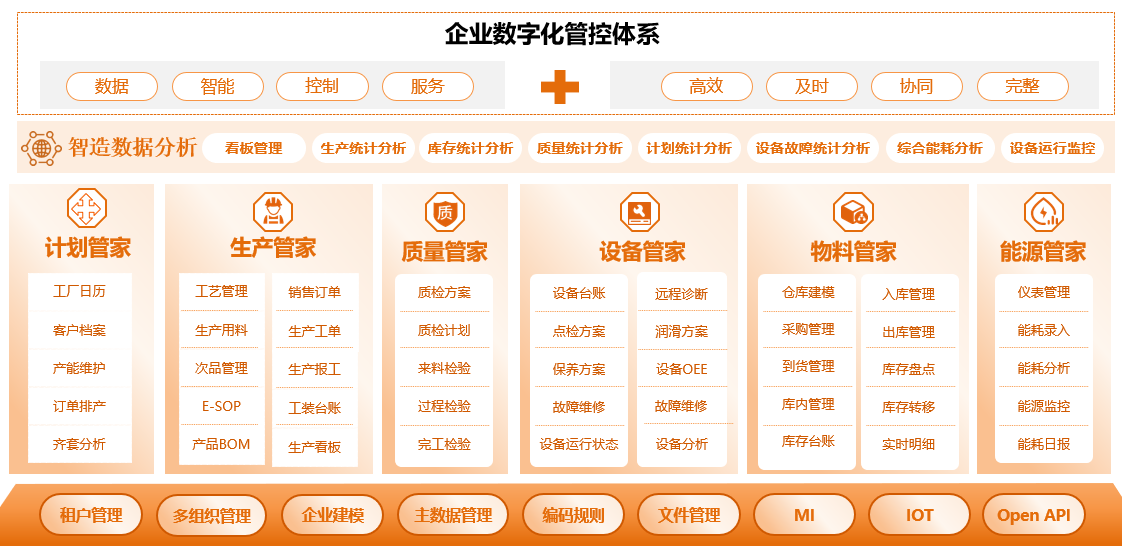
With the "Small, Fast, Lightweight and Precise" management series, we provide small and medium-sized manufacturing enterprises with lightweight, simple, efficient and precisely adapted production operation management solutions.

image.png

Typical case
Lanzhou Liu Yan Kunrun Petrochemical